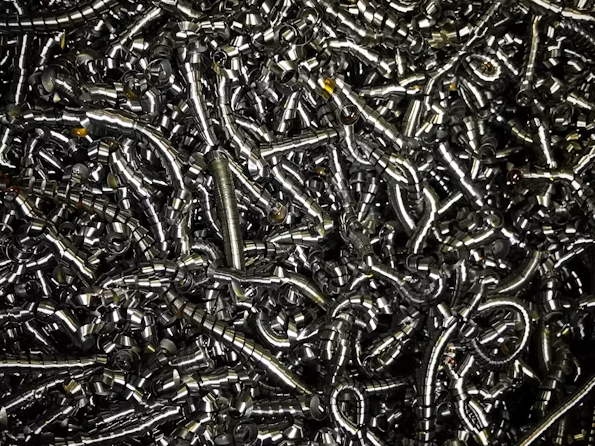
Most businesses treat metal offcuts as rubbish rather than stock. Bins fill, skips go out, and nobody checks what left the site or what it was worth. Scrap metal generated through daily production carries real value, yet that value disappears the moment it is mixed with general waste and forgotten.
Professional scrap metal recycling turns that loss into a recorded return by weighing, grading and paying for material that would otherwise be thrown away. The shift is operational as much as financial. Waste volumes drop, bin costs fall, and the yard gains a documented trail showing exactly where production offcuts ended up.
Why Metal Waste Quietly Drains Operating Margins
Skips That Carry Paid-For Material off Site: Every skip of mixed waste leaving a fabrication yard usually contains material a merchant would have paid for. Steel drops, copper tails and aluminium extrusion end up buried under packaging and timber. The business pays a disposal fee to remove something with a market price, which reverses the transaction entirely and repeats with every collection.
Delay That Narrows the Options Available: Postponing a recycling decision shrinks the choices open to a site. Bays fill with unsorted material, grades become harder to separate, and contamination lowers what the load will fetch. Operators in the industry regularly see businesses that ran ad hoc disposal for years and later faced a costly clear-out on a compressed timeline.
See also: Emerging Trends in Engineering Digitization
Metal Streams Are Not One Material
Grades That Sit at Very Different Values: Value varies enormously between metals, which is why treating all offcuts as one waste stream costs money. Copper, brass and stainless steel command far higher rates per tonne than mild steel or mixed light iron. A single bin holding all of them is usually assessed at the lowest grade present. Separation protects the difference.
Sorting at the Point Where Metal Is Generated: The cheapest place to separate metal is where it is produced, beside the saw, press or cutting bay. Once material travels to a central pile, identification takes labour that few teams have spare. Labelled bins for ferrous and non-ferrous drops keep grades intact and make each load straightforward to assess on arrival.
Quotations That Turn Offcuts into a Known Figure
Quotes Built on Grade, Weight and Access: A recycling quotation is calculated from the metals involved, the estimated tonnage, and how easily a truck can reach the material. Sites supply a description of what they generate, along with photographs or a site visit where volumes are unclear. The figure returned reflects current market rates rather than a fixed price list.
Revenue or Cost Depends Entirely on the Mix: Some loads pay the business, others carry a charge, and the quotation states which applies before anything is collected. Heavy non-ferrous volumes usually return money. Light, contaminated or low-grade material may only offset transport. Knowing the outcome in advance lets managers budget metal handling as predictable operational expenditure instead of a surprise.
In-House Handling Compared with a Managed Collection Service
Selling Direct without Volume or Equipment: Businesses can transport material to a yard themselves, and for small, clean loads that route works. It requires a vehicle, staff time, and someone confident in grading. Larger operations quickly find that repeated trips absorb hours and that irregular scrap metal volumes make self-delivery an unreliable way to recover value.
Collection and Storage Handled as One Arrangement: A managed service supplies bins or cages, schedules pick-ups around production, and removes the load without disrupting the floor. Storage stops being a space problem because containers are swapped rather than left to overflow. Treating recovery as reverse logistics rather than waste removal keeps material moving in usable condition, and the routine stays the same.
Recovery Systems That Keep Paying Over Time
Records That Support Compliance and Reporting: Weighbridge dockets and transfer records give a business documented proof of where its metal went, which matters for environmental reporting and tender submissions. Buyers and auditors increasingly ask for that trail. A recycling arrangement produces it automatically, turning a compliance obligation into paperwork that already exists rather than something assembled under pressure.
Returns That Compound across the Year: Individual loads rarely look significant on their own. Across twelve months, consistent recovery of scrap metal from a working site adds a meaningful figure to the ledger while cutting general waste charges at the same time. Sites that measure both sides usually find the combined effect larger than either number suggested alone.
Signs a Site Has Outgrown Ad Hoc Metal Disposal
Certain patterns show that informal disposal has stopped working and that a structured scrap metal arrangement would serve the operation better. Most of them appear gradually, which is why they go unnoticed until costs or space become a visible problem. The following indicators are worth checking against current site practice.
- General waste bins regularly contain visible offcuts, tube ends or cable.
- Staff spend time shifting piles of metal to free up floor space.
- Nobody in the business can state what last year’s metal disposal cost.
- Copper, brass and stainless material sits mixed with mild steel drops.
- Skip collections increase during busy periods without any offsetting return.
Turning Offcuts into a Measurable Return
Metal leaving a working site is stock, and treating it that way returns money, floor space and clean records to the business. Every month it continues as general waste, that value is written off permanently. A short conversation about volumes and grades is enough to start, so arrange a quotation and find out what the material is actually worth.
